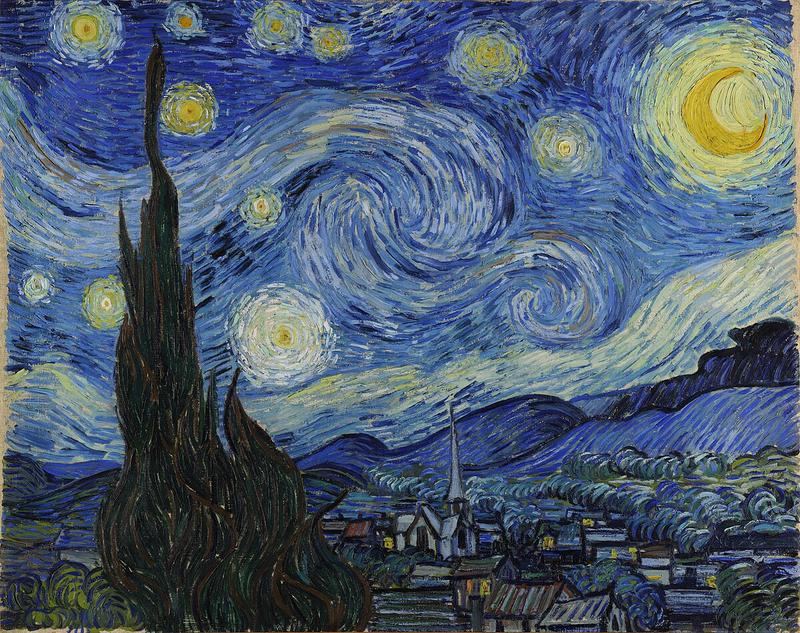
 The Starry Night by Vincent van Gogh
I recently stumbled onto a post called how to have good taste. In the world of how to posts, books and videos where there’s an explainer for everything, I find this to be a particularly terrible subject for the genre. The Substack paints a picture that once you go through a lot of something, you too can have good taste. The taste that makes you prefer the actual good stuff.
It’s a little infuriating, to be honest. What does good taste even mean? The post seems to imply that creative endeavors are good or bad and you should like the “good” one. Well, who’s the judge for good or bad? Does popularity make it good? The highest-grossing movie in 2025 is Ne Zha 2; does that make it in good taste? I don’t know. I think the last Mission Impossible movie was great, but I don’t think most people would say it is in good taste. I believe there’s some undefined notion of artistry that’s very different from popularity. For movies, the judge is Hollywood; for other forms of art, I am not sure who the judge is, but there certainly is one.
A friend of mine loves Van Gogh. He has a copy of The Starry Night in his apartment. It’s a beautiful painting, and because he’s a friend and I felt safe, I told him that one of the impressive things about the painting to me is that it’s factually accurate. The stars looked exactly like that on that night. That was not even in the top 10 impressive things to him. But my point is, I wouldn’t say that to others because I will be judged harshly. I feel it’s quite unnecessary to judge people here. I work in tech, and you would be astonished to learn the intricacies of software. A seemingly simple Google Search goes through this mind-numbing flow of information retrieval, but nobody would judge you for not knowing that. Coming back to Van Gogh, the more you know about his life, the more impressive his work gets, but the idea that a painting should invoke something profound in you feels like a reach.
I think this has always been an issue in the arts and literary field. There’s this implicit snobbery where someone has established that these creations are good and if you don’t like them, you simply don’t understand them. In how to have good taste, Henry Oliver says
Klein is reacting to the snobbery of good taste, which leads people to pretend to enjoy art for social reasons. Talking about good taste and bad taste often invokes such snobbery, as if bad people have bad taste. This isn’t true, of course. Reading Jilly Cooper or Colleen Hoover or Prince Harry doesn’t mean that you are bad. But no-one sensible can equate those books with the work of George Eliot. No-one who has read a lot of literature and, as Chayka says, made it part of themselves, would equate them.
I agree with the general premise of good work. Not all work is created equal. It would be stupid to say that my writing even comes close to any of the writers mentioned above. There’s no denying that writing can be good or bad. Great writers take you on a journey. They present thoughts that surprise us, motivate us, move us. It’s not easy to do. This essay isn’t one. It’s not going to take you on a journey.
Yet, I feel good taste is just another way of saying you’re just not well-read enough to understand that thing I am talking about. I think people forget what taste really means. What if I read them all yet I still like silly how to Substack posts? What if I eat the most exquisite food and still prefer toast with butter? I actually do enjoy toast more than a Michelin star restaurant.
I do agree with the fact that knowledge enriches experience. The more you read, the more you understand. Reading exposes you to various viewpoints, various styles of writing. You need to have eaten at a Michelin star restaurant to understand the complexity and innovation of the cuisine. But understanding complexity isn’t the same as having superior taste.
I believe taste just means your experience. You like what you like. There’s no judge deciding good or bad. As a society, we just can’t stop creating hierarchy to justify that we’re so much better than the rest. There are countless ways to do so. Writers have their own ways e.g., liking George Eliot as I have been told by Henry Oliver. In the tech world, people brag about GitHub commits. Now that AI is writing code, the GitHub commits have become meaningless, so we in the tech world will find something else to virtue signal.

As someone who certainly has “bad taste”, I would say, Dear Reader, taste is yours, don’t let anyone define it as good or bad. Eat what you like, read what comforts you or motivates you. Let the snobs be snobs.